
Article: What to Bring When Your Host Says, “Don’t Bring Anything”
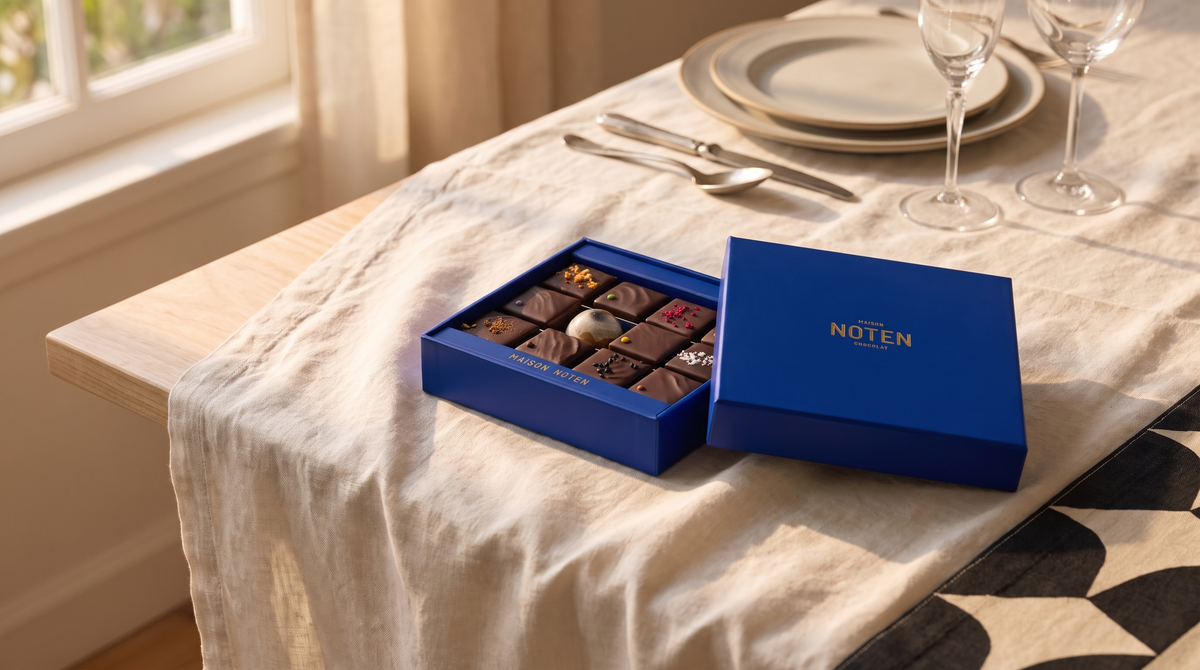
What to Bring When Your Host Says, “Don’t Bring Anything”
There is a particular sentence every generous host says:
“Please, don’t bring anything.”
Usually, they mean it. Your host does not need another salad competing for refrigerator space. They do not want to locate a serving bowl while opening the door, checking the oven, and pretending they did not just hide three grocery bags in the bedroom.
Still, arriving empty-handed can feel a little strange.
We are French. We believe in respecting instructions. We also believe in bringing chocolate. Occasionally, these principles conflict.
The solution is not to bring something the dinner needs. Bring something the host can keep.
The best host gift creates no work
A thoughtful host gift should not need to be opened, plated, chilled, arranged, or admired immediately.
It should not arrive with instructions.
It should certainly not require the host to announce, “Everyone, Nathan has brought a very special dip,” when Nathan was specifically asked not to bring a dip.
The ideal gift quietly says: This is for you. Enjoy it tonight, tomorrow, or after everyone finally leaves.
That distinction matters. You are not contributing to the menu. You are thanking someone for welcoming you into their home.
“When I host, I love receiving something that feels personal but never creates more work. Something I can keep in the home, enjoy after the evening, or quietly return to over the next few days.”
Laura Noten, Co-founder of Maison Noten
Bring pleasure, not responsibility
Flowers are beautiful, but loose flowers can become an assignment. Suddenly, your host needs to find a vase, trim the stems, clean the leaves from the counter, and decide where the arrangement belongs. Meanwhile, dinner is getting cold.
Wine can be wonderful, provided you do not expect it to be opened that evening. The host may have already chosen the wines, or may not drink at all.
Dessert is generous, but only when discussed beforehand. An unexpected cake can accidentally become a small coup against the dessert your host spent six hours preparing.
Chocolate avoids many of these complications.
A beautiful box can sit gracefully on a table or wait until the next day. It can be shared with the room or hidden in a cupboard with remarkable speed. Both are correct forms of appreciation.
Choose something everyone can enjoy
In Los Angeles, a dinner table may include a vegan guest, someone who keeps kosher, a person avoiding dairy, and another person who has recently developed a passionate theory about seed oils.
Hosting everyone beautifully requires attention. Your gift should make that attention easier, not more complicated.
We are proud that Maison Noten chocolates are vegan and kosher, but we never wanted those qualities to feel like compromises printed in small type. They are part of the craft.
The gift should be inclusive and still feel indulgent. It should belong in a beautiful home, at the end of a considered meal, among objects chosen with care.
Luxury is not only about rarity. Sometimes, luxury is the ease of placing one box on the table and knowing that more people can reach for it.
“We never wanted anyone to taste our chocolate and think, ‘This is good for something vegan.’ It simply has to be exceptional chocolate. Being vegan and kosher means more people can share it, but the pleasure always comes first.”
Nathan Noten, Co-founder of Maison Noten
Let the host decide when to open it
This may be the most elegant part of the gesture. Release the gift from expectation.
When you hand it over, say something simple:
“This is for you. Please save it for another evening.”
That sentence is a gift in itself. It tells the host they do not need to rearrange the menu, find another plate, or distribute your present equally among twelve people while you observe who takes the largest piece.
Of course, if the box is opened immediately, we support this decision completely.
We are chocolatiers, not disciplinarians.
How much should you bring?
The host gift should feel generous without becoming ceremonial.
For an intimate dinner, a small, beautifully composed box is enough. For a larger gathering or an important celebration, choose something more abundant, but still easy to receive.
The goal is not to impress the room. The goal is to delight the person who invited you.
A useful rule is to select the gift as though the host might enjoy it privately tomorrow morning with coffee. This usually leads to better choices.
And if they truly mean nothing?
Listen to your host.
Some occasions genuinely call for nothing: close friends gathering casually, a host who insists repeatedly, or a celebration where gifts would make the moment uncomfortable.
Good manners are not a rigid performance. They are a form of attention.
But when you want to acknowledge an invitation without interfering with the evening, bring something self-contained, lasting, and made with care.
No vase. No serving instructions. No surprise flambé.
Just a beautiful object filled with chocolate.
Because “don’t bring anything” usually means:
“Please don’t make more work for me.”
It rarely means:
“I would be offended by an exquisite box of chocolates.”


Leave a comment
This site is protected by hCaptcha and the hCaptcha Privacy Policy and Terms of Service apply.